


Your probably seeing more exhaustion now. With the layoffs, tightening economy, and the ridiculous asks that you’re probably having? Exhaustion sets in quick.
Knowing this, I’d like to write a few things about burnout. I’ve got pretty deep experience with it from both the military and consulting, where I had to pull 60 hour to 100 hour weeks. For very thankless reasons and what amounted to minimum wage if you added it all up.
But I’m not here to complain about that. I’m here to help you. So I’ll be talking about from those experiences how to handle burnout.
There’s several points I want to emphasize about burnout:
Burnout is all the breaks and vacation you needed happening all at once. The mind and body needs breaks from all sorts o stress. : people, politics, workload, or just sheer volume of work.
It is not wrong to burnout. Its quite normal, and it doesn’t mean you’re weak. Or you’re not strong enough. Sometimes the brain and body hit a limit. And sometimes, you can’t go further. That’s normal.
Trying to fight burnout means finding a purpose.
All burnout starts with the loss of purpose. Maybe you realized you’re never going to get promoted. Or the company you worked with doesn’t do career development. These all lead to failure of purpose. And taken long enough? Lead to burnout. Purpose disappears first.Sometimes you just need to call it quits. Sometimes you just need to call it quits. A loss of purpose isn’t always recoverable within the same environment. The longer you try to force meaning into something hollow, the faster the burnout accelerates.
Let’s break it down a bit. And there’s a few examples in here.
1. Burnout is all the breaks happening all at once.

To understand burnout, start by understanding what it actually is: delayed rest happening all at once.
I’ve seen this up close, more than once. One ML engineer I worked with was managing two models in production—one for real-time personalization, the other for pricing. He was the go-to guy, the one who could patch latency issues at 2 a.m., debug misfiring features mid-demo, and still show up to give stakeholder updates with clean decks and cleaner code. For six months, he was bulletproof. Until one day he wasn’t.
After back-to-back rollouts, he disappeared. Slack went silent, and an emptier calendar. His out-of-office just said: “Unavailable until further notice.” The CTO told me privately that he was checked into a clinic. blood pressure spiked, couldn’t focus, couldn’t sleep, couldn’t even hold a conversation without shutting down. The system had pulled the emergency brake. All the rest he postponed hit him in a single collapse. He ended up in taking a leave of absence.
So its often strongest performers are the most vulnerable. Not because they’re fragile, because they’re consistent. There’s no pause for them. Often they delay rest until too late. Momentum becomes inertia, and by the time they feel it slipping, it’s already too late.
So ask yourself these questions:
Are you treating recovery as a reactive process, or a scheduled one?
Have you normalized working under pressure without relief valves?
Are you solving systemic overload with personal coping tactics?
Most people treat exhaustion like a badge of honor. They throw weekends and sleep into the furnace to keep the sprint going, thinking the system will thank them later. Its never thanked me. Or those managing directors or middle managers I’ve seen burn their lives down.
Know that burnout isn’t fatigue. It’s debt collection, with a high rate of interest. And once the interest compounds, you don’t get to negotiate the terms. It collects.
In my experience working across engineering and product orgs, it plays out two ways:
You build rest into the system. You normalize real recovery. Not performance theater, not “wellness initiatives”—actual space to recalibrate.
Or you don’t. And the debt builds silently, until it’s too big to carry.
Burnout doesn’t show up when people are weak. It shows up after they’ve been too strong, for too long, with no relief and no reinforcement.
You don’t get to choose when it hits. But you can choose whether to pay it in small installments—or in one catastrophic explosion.
2. It is not wrong to burnout.

Let’s get something straight: burning out doesn’t mean you’re weak. It means the system you were operating in wasn’t sustainable—and you were the one holding it together longer than anyone else could have.
There’s a recurring pattern I’ve seen across almost every industry I’ve worked with engineers, researchers, data teams, even directors. And when they collapse, people act surprised: “I didn’t think it would happen to them.”
This is nonsense. And let me give you another story:
I worked with a staff-level ML engineer who’d been firefighting bad infrastructure for almost 3 years. He was quiet, reliable, and never made noise. Then the layoff came. And gutted his team and the platform engineers that supported them. He ended up doing all the work to keep his projects together.
Then, right after pushing a major release, he no-showed an exec review, packed up his equipment, and mailed it back with a single line: “I’m done.” He didn’t even finish the day. Just a final decision made in silence, after months of carrying weight no one else would touch.
He thought working harder would make him invaluable. That asking for help would cost him leverage and his career path. And maybe you think the same.
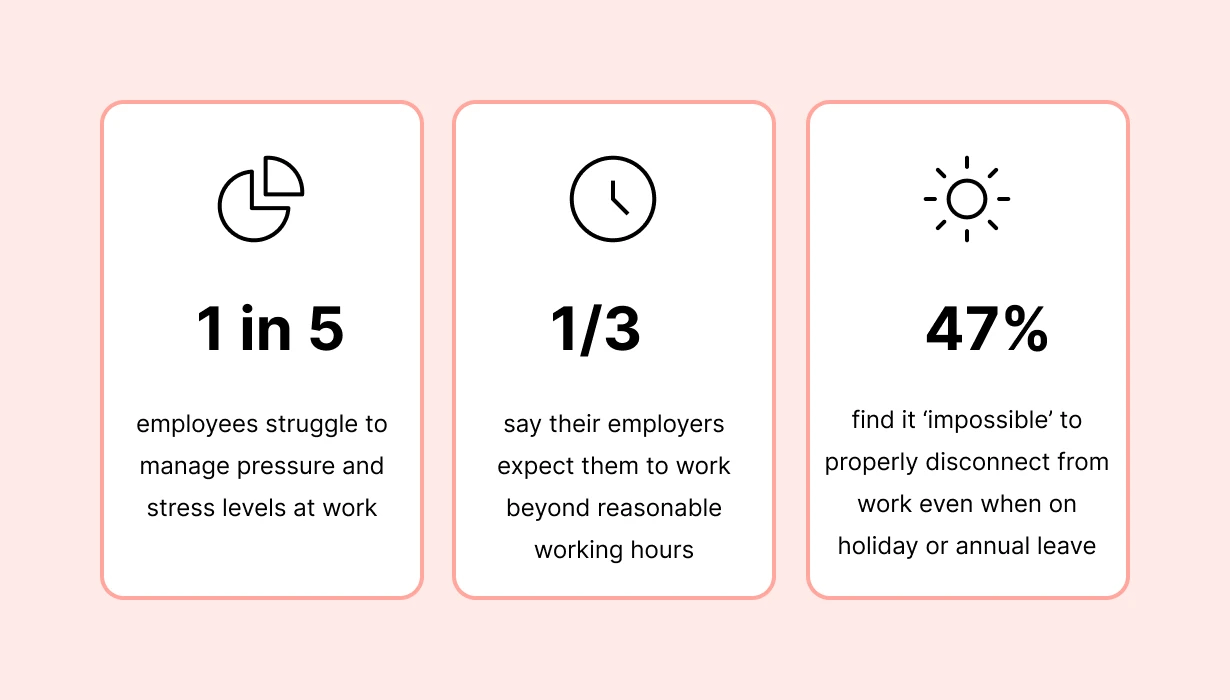
But you can’t out-grind organizational failure. You can’t fix broken incentives with willpower. If the system doesn’t support you even a little? The job will break you. And it will take months for you to recover.
This is how I’ve seen it play out:
You take on more work than your peers. Either because you’re good at it or because you don’t push back. At first, it gets you praised. Over time, it gets you taken for granted.
You deprioritize recovery. Because the timeline doesn’t allow for anything else. Deadlines don’t wait for rest. Or because you could do it earlier in your career.
You see others getting ahead with less effort less output, more political positioning. And you realize performance isn’t the only currency. That realization is corrosive.
You begin to disengage—not out of laziness, but because sustained effort with no visible return breaks the incentive loop. You go from invested to mechanical.
And this is key: burnout often happens to the people who try the hardest to avoid it. They’re the ones who stay late, volunteer first, go the extra mile, until they’re too depleted to continue. And instead of the system taking responsibility, they’re told to “speak up earlier next time.”
Ask yourself:
Has the company ever rewarded you for taking care of yourself?
Do leaders model sustainable behavior, and do they praise sacrifice?
Are you being burned out by your role or by the politics around who gets credit, who gets promoted, and who gets to say no?
Who stands to gain from your work, and how much are they rewarded for it?
There must be give and take. And anyone telling you its all on you is gaslighting you. Or just can be that cold and unfeeling. I’ve met my share of slave drivers, and they are like this.
So burnout is not a moral failure. Or individual weakness. It’s the outcome of strenuous effort under conditions where power, reward, and recognition are misaligned.
But can you beat it?
3. Trying to fight burnout means finding a purpose and setting boundaries.

Burnout doesn’t always come from overwork. It often comes from directionless work. Where effort no longer justifies the return. Or when work gives more work, without a reward or acknowledgement for what’s been done.
Finding purpose no matter how small gives your effort meaning. Boundaries protect your ability to keep showing up. Without them, high performers run on habit until the habit empties them out.
First, burnout begins when the work stops going anywhere.
Learned this the hard way in the last stages of my consulting career. Every day ended up less working on better tech solutions. And only slide decks. Same old thing for 4 years. Wasn’t chaotic.
Burnout doesn’t require chaos. It can happen in clean, quiet, well-organized teams. Especially when good work gets consistently disconnected from outcomes. One retail AI team I worked with was doing excellent model work. But over time, strategy kept pivoting. Forecasting models became internal demos. Outputs got shelved. The link between contribution and consequence broke.
Eventually, people left. Not because they were overloaded—but because they realized the system wasn’t going to change.
Watch for these signals:
You’re consistently delivering, but nothing you build sees follow-through
Priorities shift so often that success never gets defined
You’ve stopped asking who benefits from your work—or if it’s even used
There’s no feedback loop between what you do and what happens next
Burnout from misalignment doesn’t shows up as drift. You stop caring, not because you’re lazy, but because nothing connects.
Second, don’t confuse motion with purpose.
A lot of people keep pushing simply because they’re used to it. The day fills itself. The backlog always grows. The dopamine hit of staying “busy” feels like traction, even when it isn’t. But effort isn’t strategy—and exhaustion isn’t proof of commitment.
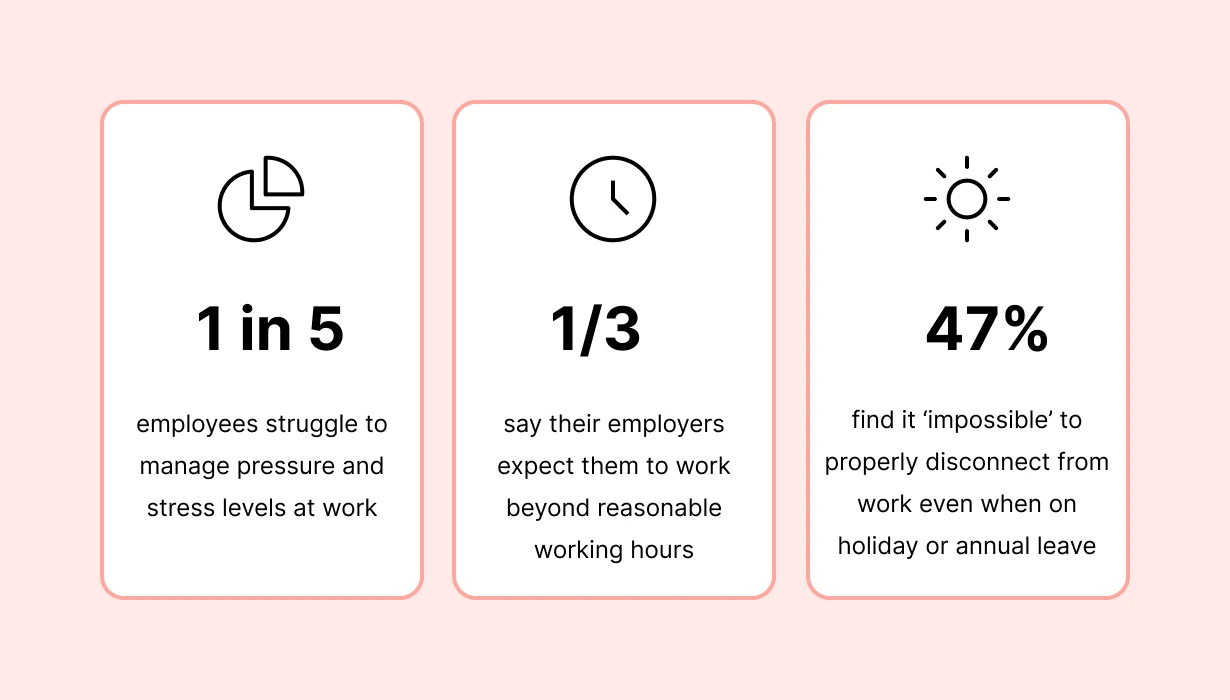
At the same time, you’ll run into people who think purpose is irrelevant. They see everything as throughput and abstraction. They’ll say alignment is soft, or “not measurable.” But when purpose is stripped out, teams burn out quietly and systematically.
If this sounds familiar, you might be stuck in inertia:
You work hard out of habit, not direction
You measure your day in exhaustion, not outcomes
You equate being needed with being valued
You’ve stopped reflecting on whether the system deserves your effort
Because people don’t just run on inputs. They need to see where it leads, and why. They need to feel like they’re building a cathedral. Not the cog in a machine. The last causes burnout.
Purpose without reflection becomes ritual. Ritual without meaning becomes grind. And that’s where burnout hardens into default.
Last, boundaries is what make purpose possible.
You don’t recover from burnout by doing less. You recover by protecting your capacity. And making sure the system knows it has limits. That’s what real boundaries do. They’re not just about work-life balance. They’re about leverage.
And leverage isn’t just saying “no.” It’s knowing when to strategically disengage. Learn o stop solving everyone’s problems. Know to slow down, go dark, or underperform just enough to remind people what they take for granted.
High performers burn out when they try to absorb everything quietly. Sometimes the right move is to step back as a signal. Let things break. Let a task sit. Stop jumping in to save the day.
Not to be passive-aggressive, but at times you need to force the people around you to recognize where the boundaries are.
This is what actual leverage looks like:
Clear, early “no’s” before scope creep sets in
Tactical slowness when you're over-allocated
Making stakeholders wait when they've overstepped
Refusing to fill leadership voids that aren't your responsibility
Ask yourself:
Do people around you feel it when you pull back—or do they just reassign the load?
Can you walk away from something without being punished for it?
Do you ever test your limits with the system—or just internalize everything quietly?
To be clear: this doesn’t mean you shouldn’t work hard.
It means working hard without leverage. No clear boundaries, no visible progression, no organizational support is what burns you out.
But that doesn’t mean you need to stay. Sometimes the best purpose? Is walking away. Then finding a new one.
4. Sometimes you just need to call it quits.

Burnout isn’t always a sign you need rest. Sometimes it’s a sign that your environment no longer justifies your effort.
This isn’t about pride or toughness. This is about strategy. You don’t stay in a losing position just because you’ve already spent a lot of time there. You don’t keep betting on a role, a team, or a company that’s shown you that there is no plan for your growth, no path to mobility, and no respect for your time.
But most people do stay. They rationalize it:
“Maybe next quarter will be different.”
“I don’t want to seem like I’m giving up.”
“I’ve invested too much to leave now.”
These are not reasons. These are stall tactics. They exist to protect egos and defer hard decisions. The truth is: you often know months before you quit that you should.
Here’s a no nonsense way to know when to end it:
First, recognize when the system is extracting more than it’s returning.
If you’re still performing but feel like you’re getting nowhere, ask yourself: where does this actually lead?
I’ve seen teams keep high performers around without promoting them, not out of malice, but because it’s convenient. They become the “glue”—the ones who know too much to lose, but somehow not enough to advance. Their competence is a trap. The org doesn't explicitly block them—it just never moves. Eventually, the realization sets in: this isn’t a pipeline. It’s a cul-de-sac.
The signs are there:
You’re solving the same problems for the third or fourth time because no one listens or follows through.
You’ve stopped asking for development conversations because the last three led nowhere.
You watch unqualified people fail upward because they play the visibility game better. Even when you do it, nothing helps.
You start planning your day around how to survive it, not how to win it.
At that point, your internal clock is ticking. You're no longer in career-building mode. You’re in damage-control mode.
When that happens, grinding harder won’t fix it. That’s not loyalty. That’s misallocated effort.
Second, pay attention to the quality of what you’re protecting.
People often stay in stagnant roles under the illusion that they’re “holding things together.” But look closely. What exactly are you protecting?
If the team has no strategy, leadership changes every quarter, and critical decisions get made by people who don’t understand the product then preserving your role in that system doesn’t make you stable. It makes you complicit in its inertia.
Burnout in these environments isn’t caused by load. But is is caused by the tension of being competent in a place where competence goes nowhere. And over time, that tension wears you down.
Last, know that quiet exits are sometimes the most strategic ones.
You don’t have to rage-quit. You don’t need a dramatic story. But you do need to be honest. If the environment won’t change, your only lever is to remove yourself from it.
People will tell you to stick it out. That “things might get better.” But inertia is powerful. Especially in orgs that reward compliance over clarity. If your gut has been telling you to go, you’re probably already too late.
Quitting isn’t failure. It’s reallocating your focus to somewhere that deserves it. And the longer you stay in the wrong place, the more you normalize dysfunction.
Burnout is what happens when you outgrow a role but refuse to leave.
Don’t wait until you’re too numb to care. Know when to walk.
Last thoughts.
Whew, that was a lot. Had to write this on the fly. This was more of a longer piece on what causes it from my past experiences. Burnout takes many forms, but handling it is tricky.
I’d like to emphasize in all cases of burn out? It does not mean you quit your work. But it does mean you may have to be creative about mitigating burnout. Whether that is quiet quitting, extra bathroom breaks, or even taking a leave of absence?
Do what you need to do. These tips are to help you gain some prespective, encouragement, and hopefully a path forward.
Anyways that’s enough for today. If you have any comments or thoughts, let me know in the comments.
You can also follow me on Twitter: